
Occupational Therapy
Enabling individuals to participate in everyday activities by enhancing abilities, retraining functions, and modifying environments for lasting independence.

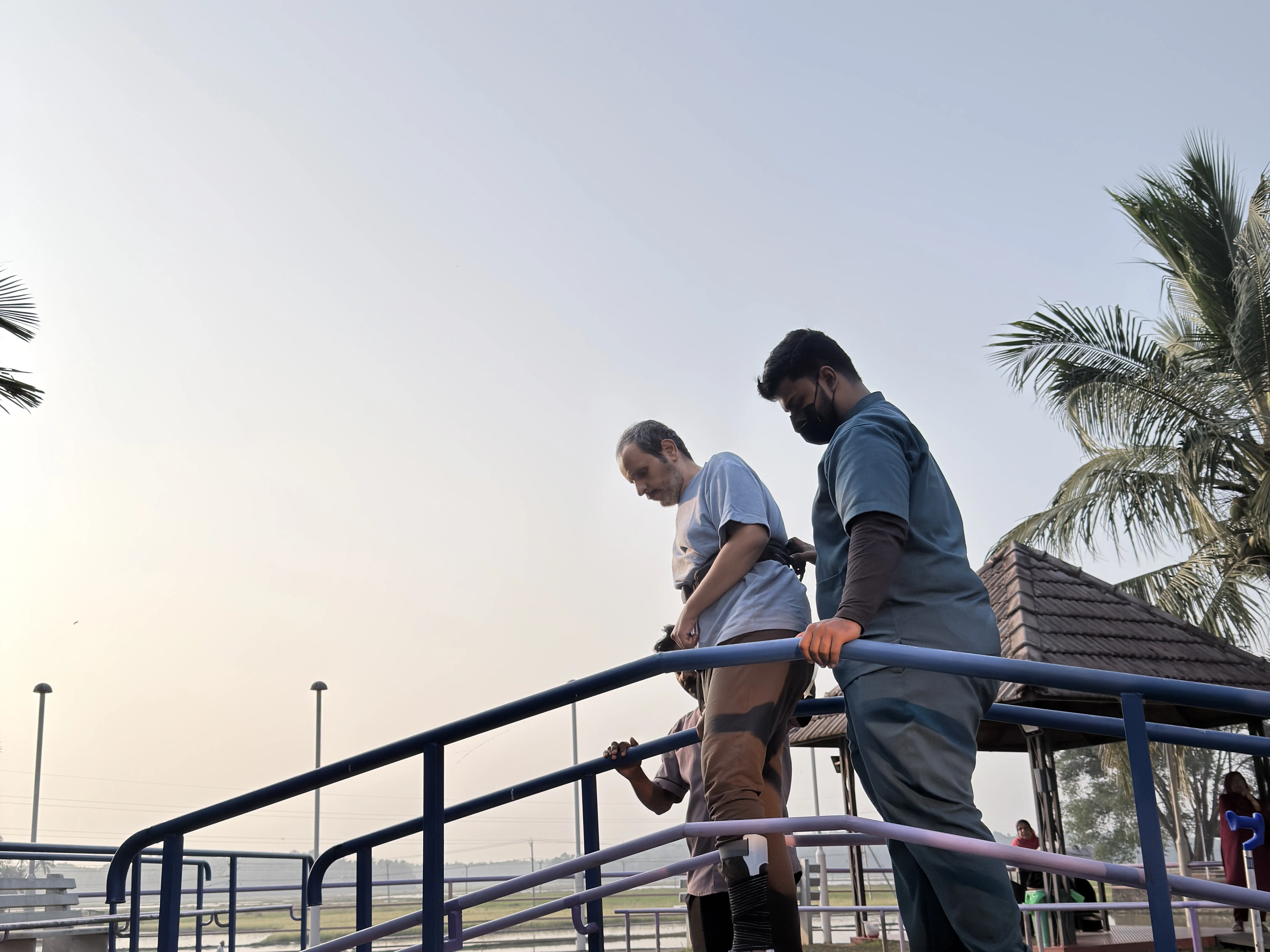
Occupational Therapy: Restoring the Ability to Live & Participate
Occupational Therapy (OT) is a patient-centered health profession focused on promoting health and well-being through meaningful occupations. The primary goal is to enable individuals to participate in everyday activities — from self-care and household management to work, communication, and social interaction — by enhancing their abilities or modifying the environment around them.
At Ayurgreen Hospital, our Occupational Therapy team collaborates closely with patients, families, and interdisciplinary rehabilitation specialists to support engagement in activities that improve physical, mental, and emotional well-being. Whether recovering from stroke, spinal cord injury, traumatic brain injury, neurological disorders, or orthopaedic conditions, our OTs bridge the gap between clinical recovery and real-world independent living.
Our occupational therapists are skilled across five core service domains: Hand Function Therapy, Activities of Daily Living (ADL) Training, Sensory Integration Therapy, Handwriting Therapy, and Cognitive Rehabilitation — ensuring comprehensive functional restoration for every patient we serve.
What Our Occupational Therapists Address
Comprehensive occupational therapy for every dimension of functional recovery — from the hand to the home to the mind.
Hand Function & Upper Limb Rehabilitation
Rehabilitating the hand following neurological paralysis (stroke, SCI), tremors, fractures, tendinitis, carpal tunnel syndrome, CRPS, and amputation. Goals include restoring grip strength, fine motor control, and daily activities that rely on hand use.
Activities of Daily Living (ADL) Training
Systematic training in both Basic ADLs (feeding, grooming, dressing, bathing, toileting, transfers) and Instrumental ADLs (communication, household management, shopping, financial management, safety procedures, driving) for neurological, musculoskeletal, and developmental conditions.
Sensory Integration & Cognitive Rehabilitation
Sensory integration therapy for Autism, ADHD, SPD, Down Syndrome, and Cerebral Palsy. Cognitive rehabilitation addressing memory, attention, judgment, and problem-solving for Alzheimer's, TBI, Parkinson's, and stroke — restoring function and quality of life.
Our Five Core Occupational Therapy Services
Expert, evidence-based occupational therapy addressing every dimension of functional independence — from self-care to cognitive performance.
Hand Function Therapy
Focused rehabilitation of the hand following acute or chronic conditions — orthopedic injuries, neurological paralysis, tremors, fractures, repetitive strain injuries (carpal tunnel syndrome), complex regional pain syndrome (CRPS), and amputation. Our hand therapy restores grip, pinch, fine motor control, and coordinated hand function required for daily self-care and productive activities. Conditions treated include stroke, spinal cord injury, Parkinson's tremors, tendinitis and tendinopathy, skin or nerve injuries, and arthritis.
Activities of Daily Living (ADL) Training
Systematic training across two tiers. Basic ADLs: feeding, grooming, dressing, bathing/showering, toileting, and indoor ambulation and transfers. Instrumental ADLs: communication management, financial management, health maintenance, shopping, household management, safety and emergency procedures, and driving or public transportation. Common conditions requiring ADL training include neurological conditions (stroke, SCI, TBI), neuromuscular disorders (Parkinson's, MS, muscular dystrophy), developmental disorders (CP, autism, ADHD), and orthopaedic injuries.
Sensory Integration Therapy
Based on Dr. A. Jean Ayres' foundational framework, our sensory integration therapy helps individuals process and respond to sensory stimuli effectively — supporting adaptive behavior across school, home, and social environments. Conditions treated include Autism Spectrum Disorder, ADHD/ADD, Sensory Processing Disorder (SPD), Down Syndrome, Cerebral Palsy, and Learning Disabilities. Therapists design individualized sensory diets, obstacle courses, and sensory-motor activities to build regulation, attention, and adaptive responses.
Handwriting Therapy & Cognitive Rehabilitation
Handwriting therapy addresses language comprehension, motor skills, and visual-perceptual abilities for patients with poor fine motor control, illegible writing, postural issues, or difficulty forming letters — common in dyspraxia, developmental delays, stroke, and sensory processing disorders. Cognitive rehabilitation targets memory issues, attention deficits, poor judgment, problem-solving, and difficulty with familiar tasks in Alzheimer's, dementia, TBI, Parkinson's, and stroke — improving functional independence and quality of life through structured cognitive retraining.
Occupational Therapy Technology & Tools
Advanced assessment tools and therapeutic technology for comprehensive, effective occupational therapy across all domains.
Armotion Robotic Arm System
High-repetition robotic arm rehabilitation providing intensive upper limb training that OTs translate into real functional improvements — dressing, eating, writing, and self-care activities.
Standardised Functional Assessment
Validated assessment tools (FIM, Barthel Index, Modified Barthel Index) to precisely measure independence in ADLs, track functional progress, and guide personalised therapy goals throughout rehabilitation.
Functional Electrical Stimulation (FES)
FES for hand opening, wrist extension, and functional grasping — enabling patients with severe upper limb weakness to perform meaningful functional tasks during occupational therapy sessions.
VR Functional Task Training
Virtual reality simulations for practising complex functional tasks — kitchen activities, driving assessments, work hardening tasks — in a safe, repeatable, and measurable virtual environment.
Adaptive Equipment Library
Comprehensive library of adaptive equipment — specialised cutlery, dressing aids, AAC communication devices, grab rails, and environmental control systems — to maximise independence with minimal caregiver dependence.
Your Recovery Journey
Our recovery path is a carefully structured, multi-phase clinical progression that guides patients smoothly from intake to dynamic independence.
1. Assessment
Comprehensive medical assessment by our multi-disciplinary panel.
2. Diagnosis
Pinpointing motor, sensory, and biological imbalance vectors.
3. Personalized Plan
Scheduling custom robotic runs and targeted Ayurvedic protocols.
4. Therapy
Intensive, daily physical training and cellular purification treatments.
5. Monitoring
Strict weekly tracking of physical and sensory progress data.
6. Recovery
Achieving optimal independence and preparing a home transition plan.
Frequently Asked Questions
Find answers to key details about our Occupational Therapy program.
Our OT team treats a wide range of conditions including stroke, spinal cord injury, traumatic brain injury, Parkinson's disease, cerebral palsy, autism, ADHD, sensory processing disorder, orthopaedic injuries, fractures, carpal tunnel syndrome, CRPS, and age-related functional decline.
Basic ADLs (BADLs) are fundamental self-care tasks: feeding, grooming, dressing, bathing, toileting, and indoor movement. Instrumental ADLs (IADLs) are more complex activities for independent living: household management, financial management, shopping, driving, medication management, and social communication. Our OTs train patients in both tiers.
Sensory integration therapy helps children with autism regulate their responses to sensory input — reducing hypersensitivity, improving attention and focus, supporting social engagement, and building the adaptive behaviors needed for school and daily life. Our OTs design individualised sensory diets and structured therapeutic activities based on each child's sensory profile.
Duration depends on the condition and functional goals. Inpatient programs typically run 14–28 days. Outpatient and community OT programs are tailored to each patient's goals, ranging from a few weeks to several months for complex conditions.
Yes. Our OTs conduct pre-discharge home assessments and provide detailed written reports recommending structural modifications (ramps, grab rails, widened doorways) and adaptive equipment — ensuring safe and independent home return for every patient.
Absolutely. Cognitive rehabilitation is a core OT service at Ayurgreen. Our OTs address memory deficits, attention problems, poor planning, and difficulty with everyday tasks using structured cognitive retraining programs tailored to each patient's neuropsychological profile.
Handwriting therapy addresses motor, perceptual, and cognitive factors affecting writing ability. It is indicated for children with dyspraxia, developmental delays, and sensory processing disorders, and for adults following stroke or other neurological conditions causing poor fine motor control or illegible writing.
You can book a consultation by submitting your medical records online, messaging our coordinators via WhatsApp at +91 89430 55555, or calling our helpline. Our team will guide you through the assessment process and design a personalised OT program.
Start Your Recovery Journey Today
Consult with our integrated clinical panel and Ayurvedic scholars to design a fully personalised pathway to recovery.